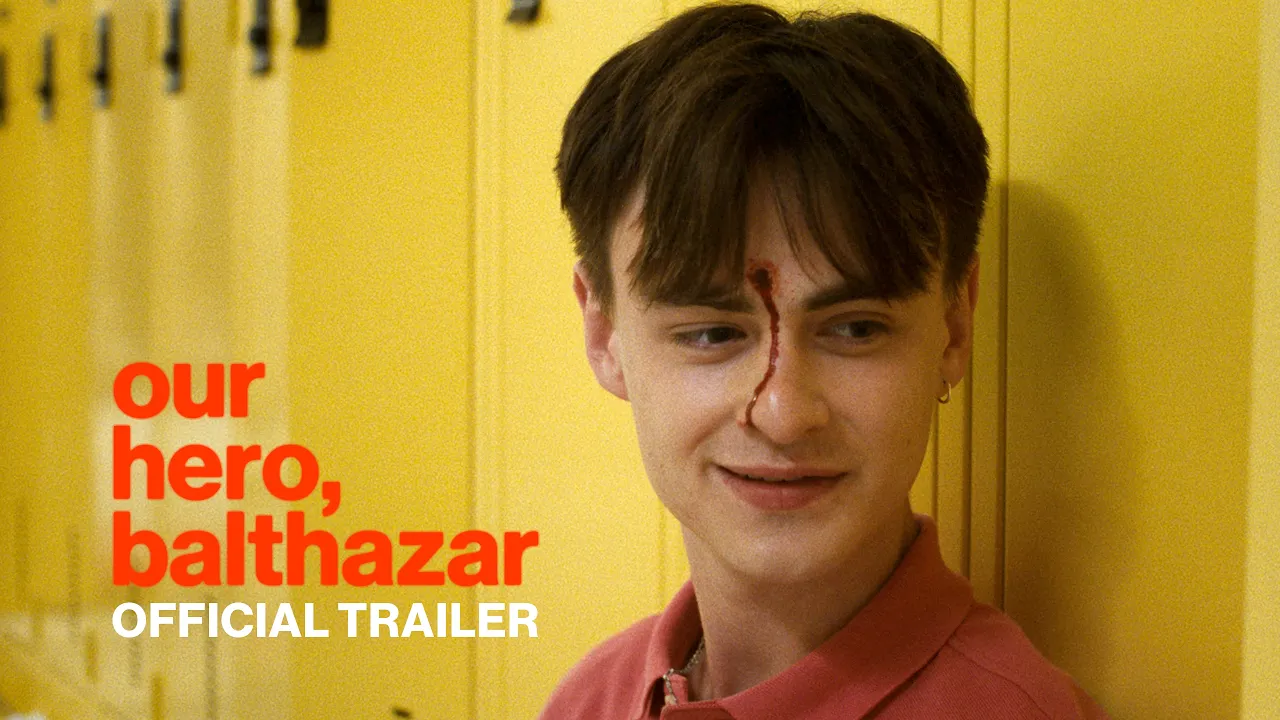

“Our Hero, Balthazar” Director Oscar Boyson and His Life Online
Jack Tellier
May 23, 2026
“Why did you rape me?!” high schooler Balthazar tearfully asks his life coach, Antony. Balthazar is imitating a video he saw on Instagram to make Antony look bad in front of a room full of his friends. It’s certainly working.
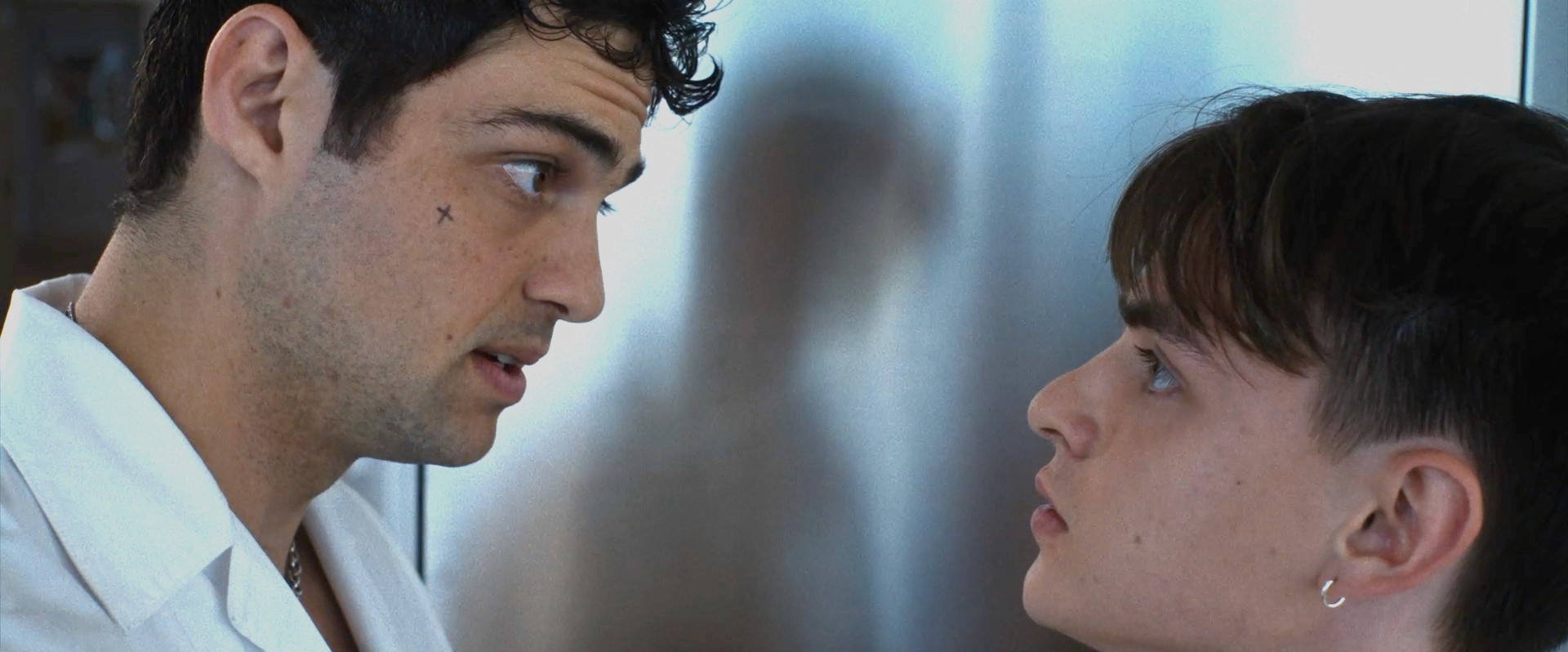
(From left, Noah Centineo plays Antony, Balthazar’s swaggering life coach, in OUR HERO, BALTHAZAR, an audacious and darkly comic coming-of-age satire about a wealthy New York teenager who follows an online connection to Texas, where he's convinced he can stop an act of extreme violence. Jaeden Martell is Balthazar.)
The scene just described is exactly that, a scene – and it has gone viral on Instagram. Meta, right? It is from Oscar Boyson’s debut film, “Our Hero, Balthazar.” The film, starring Jaeden Martell and Asa Butterfield, examines social media posturing and the internet’s relationship to acts of mass violence. Boyson himself has had his own special relationship with the web; he’s constantly had an interest in feature filmmaking but “always kept one foot in internet filmmaking.”
Oscar Boyson: I've always liked movies that hold a mirror up to the reality that we're all living in. I think people are a little afraid of that or they might feel like, “Why do we need to do that when all of us just can access that reality through our phones? Do we really need movies that are doing, you know, a long-form version of what our phones can do 24/7?” I was very conscious of not wanting to make a screen movie or a movie that almost, like, exists inside the world of the computer, you know what I mean? The movie is much more interested in the eyes that are watching the screen than the screen itself.
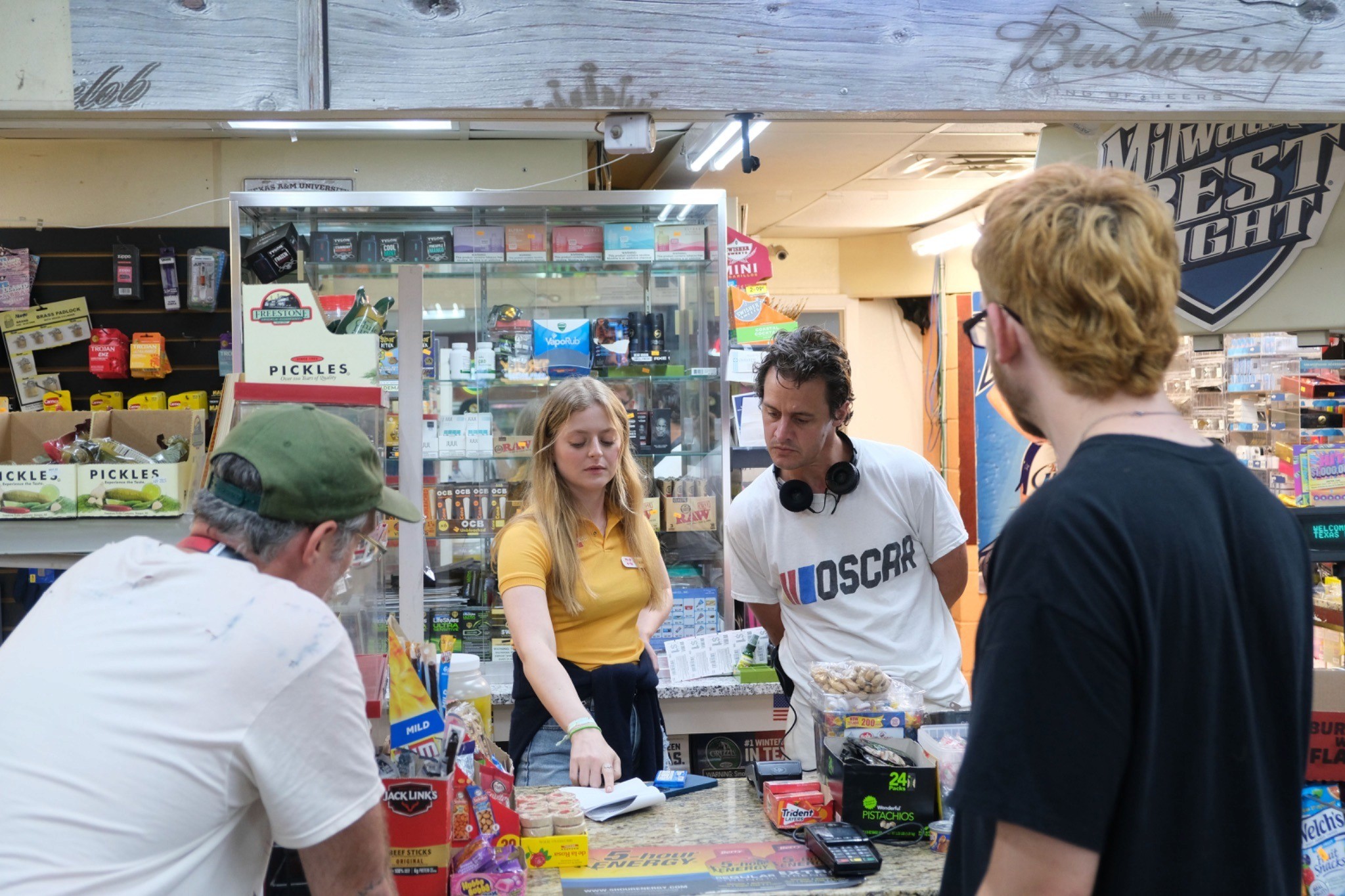
Left to Right: Ricky Camilleri, Anna Baryshnikov, Oscar Boyson and Asa Butterfield (Credit: Max Frankel)
Growing up in North Yarmouth, a small town in Maine, Boyson was known as “the guy who made movies” in school. Through his mother who worked at a high school, he had access to MiniDV cameras and early versions of Final Cut Pro to make films, recaps of school events and other projects. When attending Boston University, Boyson met Ricky Camilleri who produced and co-wrote “Our Hero, Balthazar.”
A few years later, the fresh-faced filmmaker found himself living in New York City and, on his first day there, began working for Casey Neistat and his brother, Van Neistat. Boyson worked as a studio assistant and manager, helping the brothers create their 2010 HBO show, “The Neistat Brothers.” A world of possibility was opened up to Boyson and Casey soon went on to be an early YouTube icon.
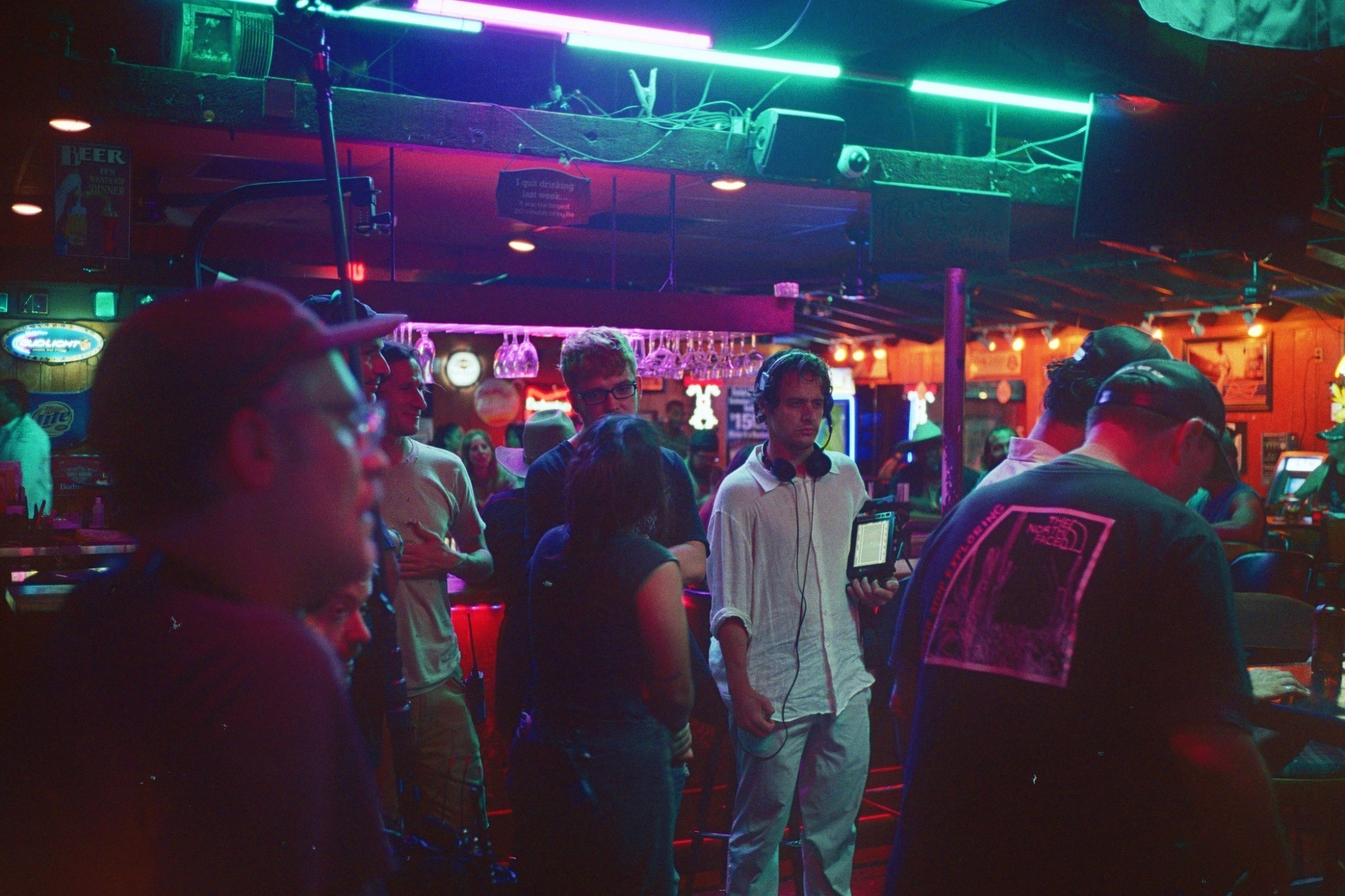
Left to Right: Crew, Asa Butterfield and Oscar Boyson (Credit: Enzo Marc)
OB: I've been recognized all over the world as Oscar from Casey's vlogs. That was the best job I ever had because they would just throw all kinds of responsibility at me, but really, I also got to see these two guys who were doing exactly what they wanted to do 24/7 and see how worth it it was, you know?
Just down the hall from the Neistat studio was another pair of famous filmmaker brothers: Josh and Benny Safdie. Boyson went on to produce Safdie Bros. films such as “Good Time,” "Uncut Gems,” as well as movies “Frances Ha” and “Funny Pages.” He did all of this while still making short films he’d post online.
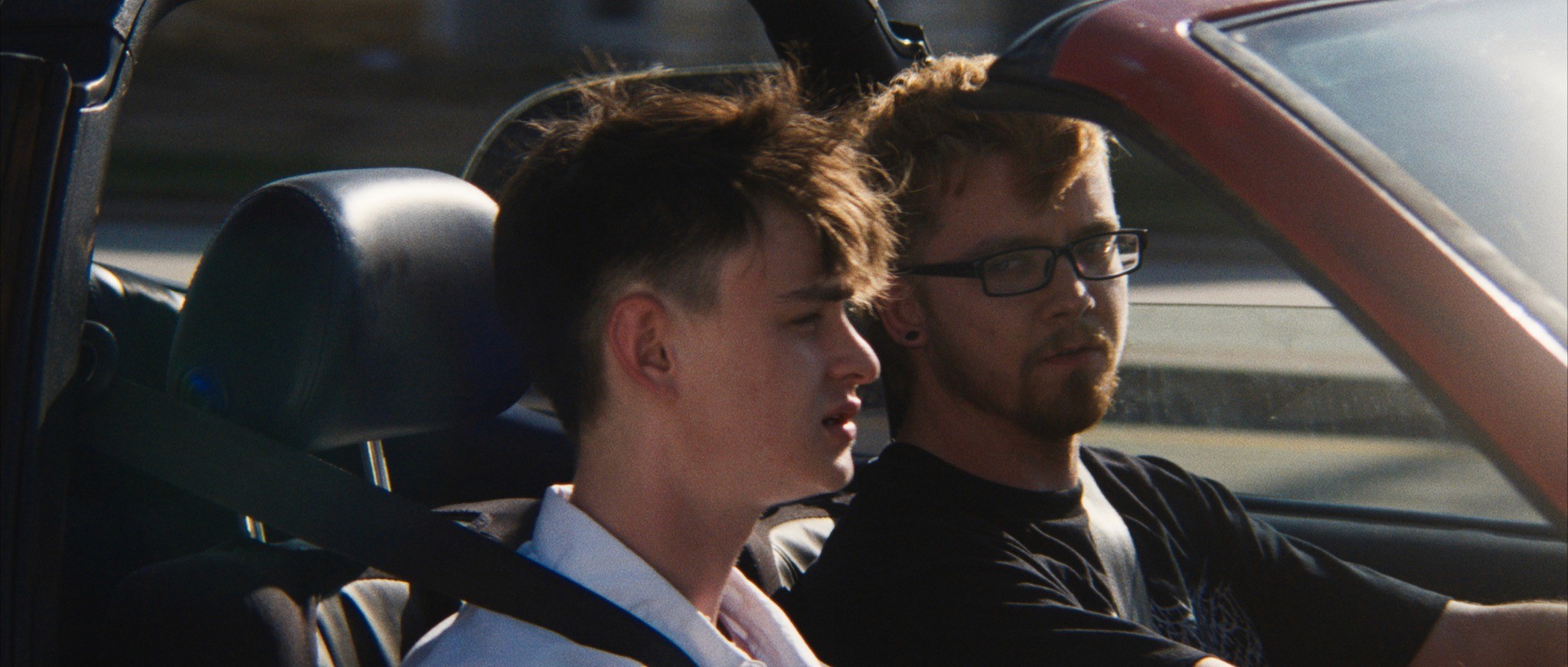
From left, Balthazar (Jaeden Martell) and Solomon (Asa Butterfield) cruising in Texas,
Jack Tellier: Is it any sort of coincidence that, in your debut feature, the internet is such a driving force? Was it ever a thought in your mind that a movie you would make would be completely separate from the internet?
OB: No. I mean, there's one script that I wrote with my friend Nick while I was at Elara [Pictures] and that was not a movie about the internet, obviously never got made, but when I started to reimagine it, I had an internet component to it. … The movie that Ricky and I wrote before “Our Hero, Balthazar,” which we put a tremendous amount of work into and maybe we'll make someday, also had an element of it. But I don't think either of those main characters were as uniquely a creation of the internet era as Balthazar.
In 2022, the Uvalde school shooter messaged a 15-year-old girl in Germany right before the shooting, telling her what he was about to do. The idea of someone getting a message like this and then trying to stop the attack is what started the writing process for Boyson and Camilleri.
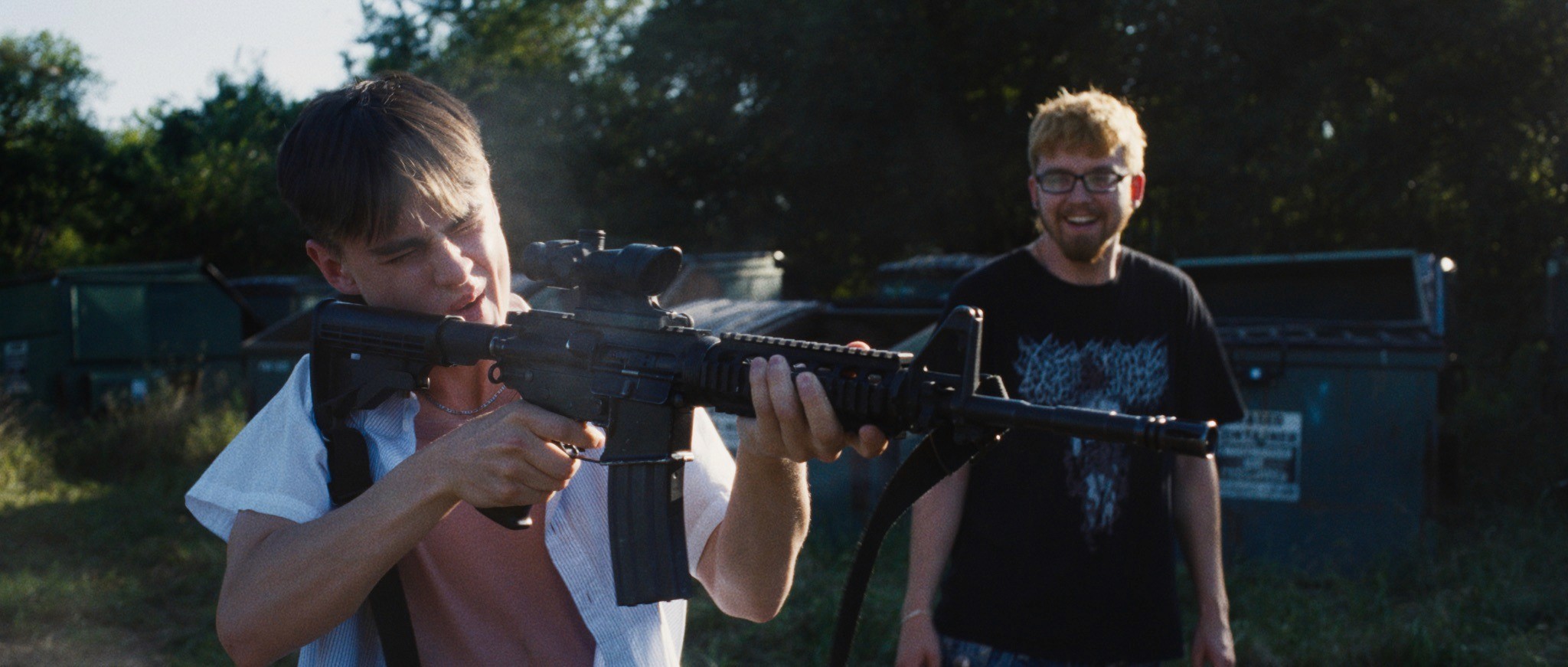
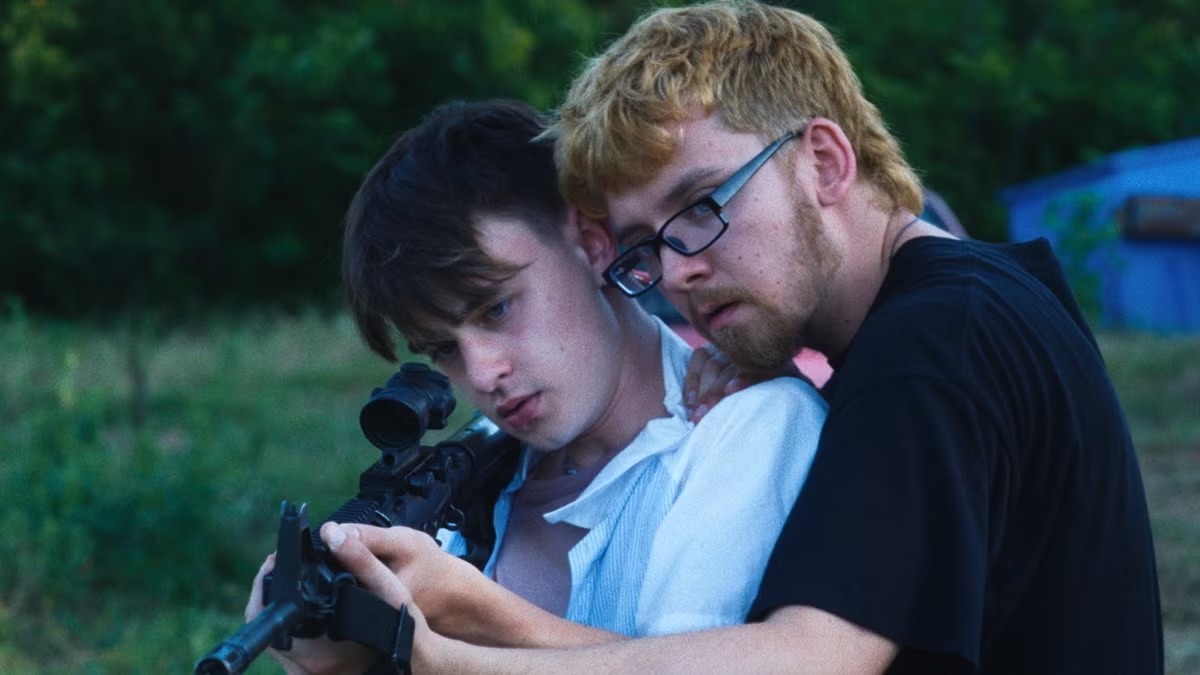
From left, Balthazar (Jaeden Martell) and Solomon (Asa Butterfield) enjoy a bit of target shooting.
JT: Do you think people are ready for a satire like this? Do you need to make them ready?
OB: Hmm. Satire is sort of difficult and elusive right now because reality feels like a satire, right? So, like, how do you be satirical when what's happening in the news and in reality feels like the stuff of satire? I think with this movie, I know there are some satirical targets at times, but I didn't feel like it was a satire by design. I wanted it to kind of trick you into thinking “Oh, this is another one of those movies about how ridiculous rich people are,” and being kind of satirical about them and “Oh, they're so funny.” And then you cut to Solomon's life and it sort of dares you to keep laughing.
I have a lot of heart and I love these two characters, even in all their faults and all their glory. I knew that I wanted that relationship to break your heart and I love movies that aren't just any one thing, you know? And the further we got away from Hollywood – which is where you're forced to reduce whatever you're doing to: “It has to be one thing” – I think the more license we got to just do what we wanted and make that movie that has you laughing and then has you gasping. That's my favorite kind of experience at a movie, so that's what I was trying to give the audience.
Apparently, Hollywood was not ready to make this kind of movie. Boyson was able to get plenty of meetings and land the script into the hands of many potential investors, but he says the mainstream film industry is too risk-averse right now for such a film.
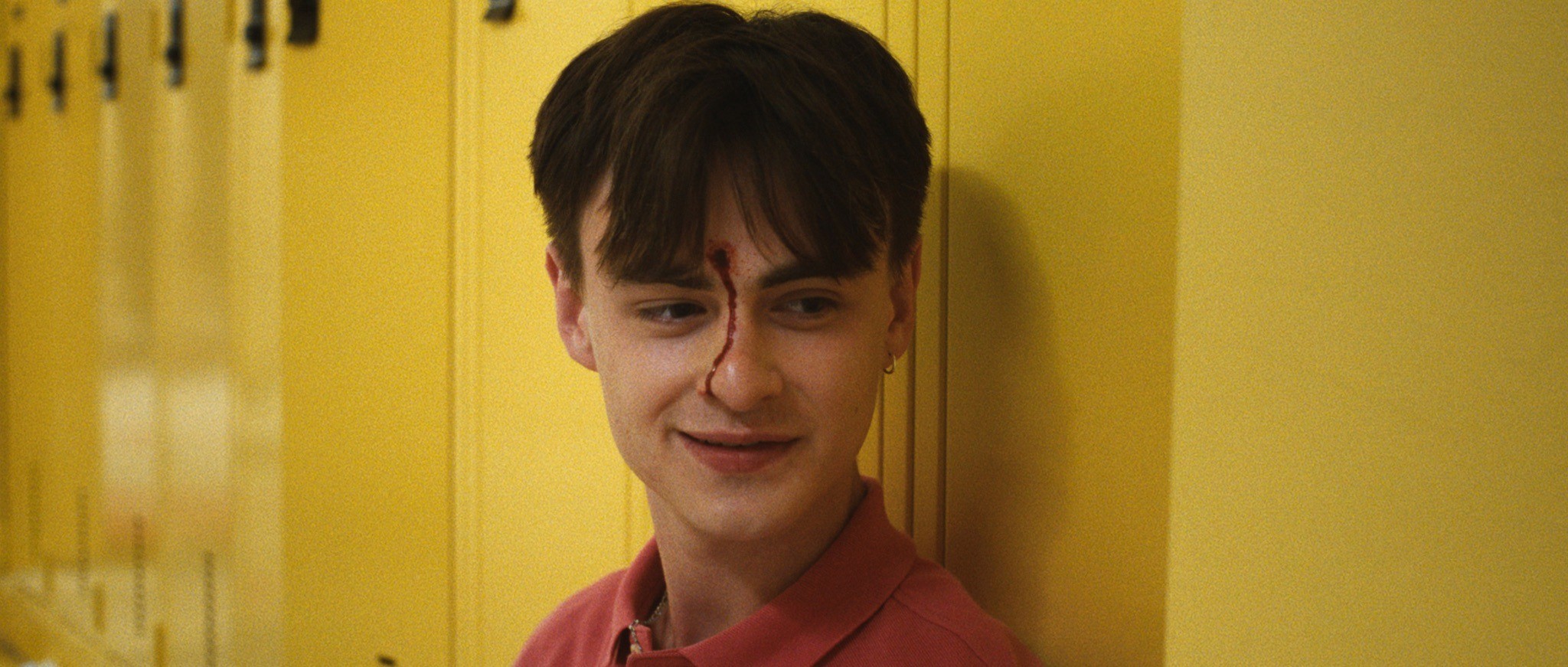
Jaeden Martell stars as Balthazar, a cynical and performative wealthy teenager made-up for a school shooting drill.
OB: I got a lot of people who just said, “Oh yeah, it's a really good script, but I don't know. It's too controversial, nobody wants this.” To me, it was like, “Well, if everyone's passing, it's going to be great. It's going to stand out, we have to do this.” That's how my mind works.
I feel like film festival programmers and gatekeepers who are greenlighting projects think that the audience is not ready for this kind of reality [in movies]. But we totally are, it's actually quite mainstream, right? Like, it's a gross underestimate on their part and this is why I think that the internet is so far ahead of movies right now and why audiences are ahead of movies.
These people would gaslight me into believing that my movie’s provocative. It's like, it's not that provocative, you guys. What are you talking about? It's just everything you're making is so fucking vanilla, milquetoast, limp and tame and just a big, flat nothing, you know?
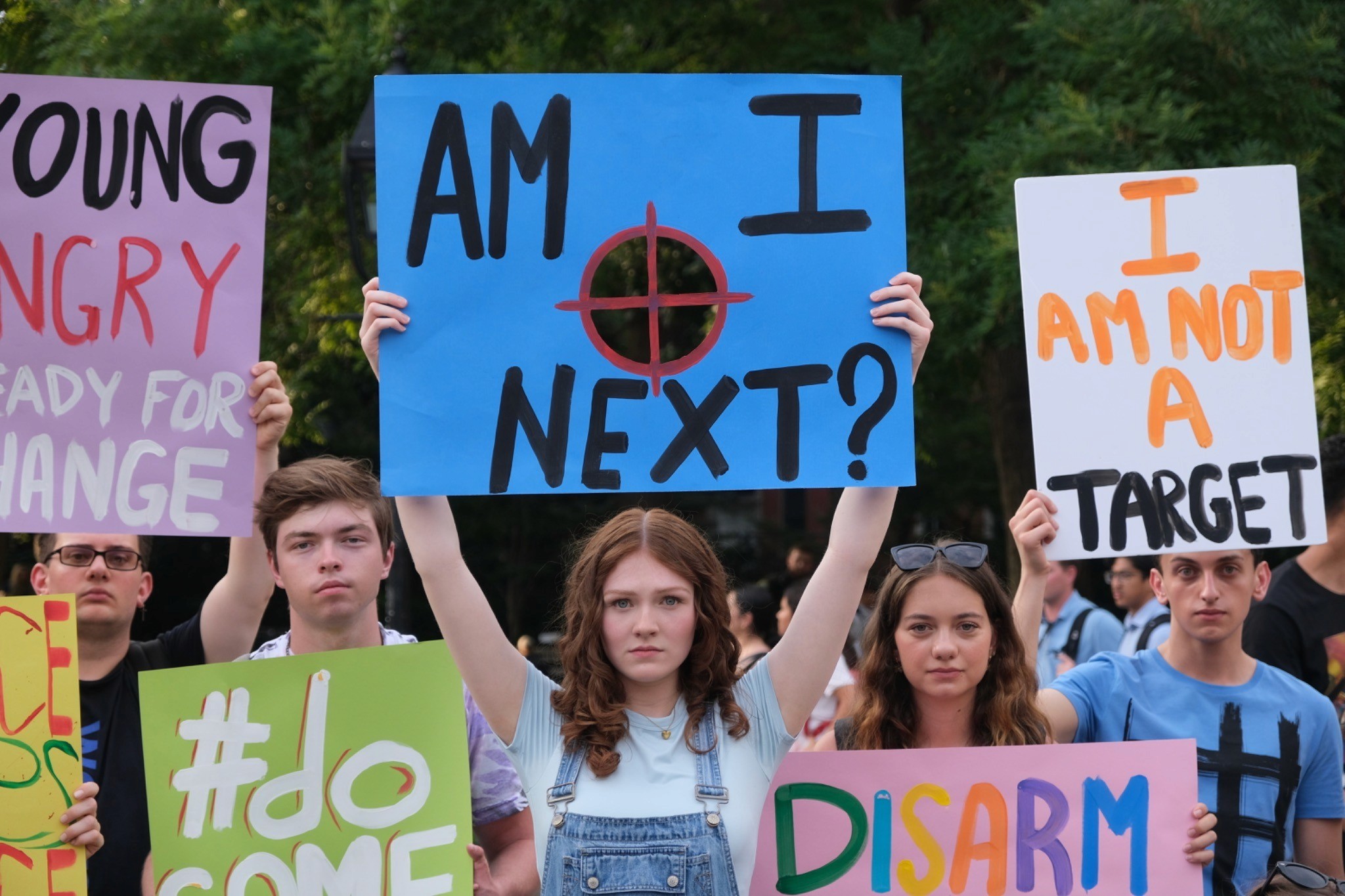
Pippa Knowles plays Balthazar’s activist crush, whose influence inspires his trip to Texas.
JT: Was there ever the urge to pull any of the punches? Whether it was you, or the actors, or anyone working on it?
OB: I don't think so. Ricky and I, like I said, we met when we were 17. I think we bonded over a shared sense of humor and sensibility. I'd say he's probably a bit more cynical and conspiratorial and I'm probably a little lighter and maybe more optimistic. Which is a good match when it comes to this stuff. I think we also know that our hearts are in the right place and we'll try to crack each other up and go a little bit further.
And you know an idea is good when you're sort of like, “Damn, that's so fucked up. Like, we can't possibly do that yet, but maybe. Maybe we could,” and you're still kind of thinking about it. … Yeah, nobody's really safe and everybody's getting “punched” in this movie.
JT: There is a plot, but this movie is very character driven. I wanted to know how you guys made these very realistic yet very soulful characters that weren't there to just serve a message. Everything they did felt very authentic to who they were as characters.
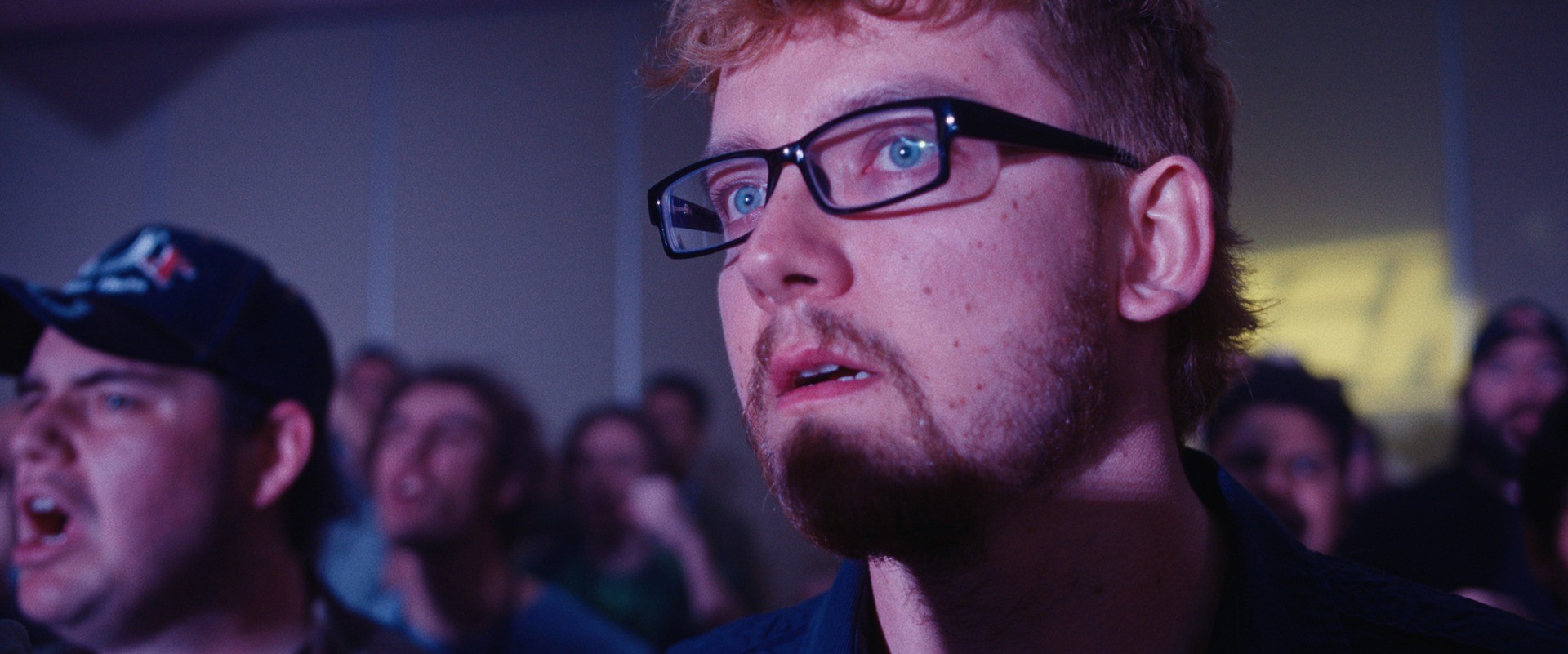
Solomon (Asa Butterfield), attends a rally in Texas trying to get his father’s attention.
OB: We did a lot of research on shooters and those are just, probably, dark holes of the internet that you've gone down yourself. I remember doing the same thing with serial killers when I was in seventh grade [when] I saw “Se7en” for the first time, you know? So that was part of the research.
I definitely was not trying to do a whole lot of research about kids today. Because I, again, I feel like most of us have had that experience with kids like Solomon from high school or junior high. That keeps happening – if somebody is from Texas, they'll be like, “Oh man, you really nailed what it's like to be from Texas with Solomon.”
And it's like, well, yeah, but you know, Asa [Butterfield] has never been to Texas before. He's English. I'm not from Texas, I'm from Maine. Ricky's from Massachusetts.
… As long as you don't live in Manhattan and go to private school like Balthazar, you know a kid like that who you might be sort of intrigued by at first, but then does something that totally alienates you. And you're kind of like, “Ah, all right, man. I'm gonna, um, see you later.” I think that's why he rings true and why you say he feels so real is because there is an element of cliché to him.
Obviously, he kind of checks off some of the boxes of things that the media would have you believe are sort of typical shooter traits. But at the same time, there's a lot that I think is very recognizable and it's a testament to Asa’s performance, that he made him so human.
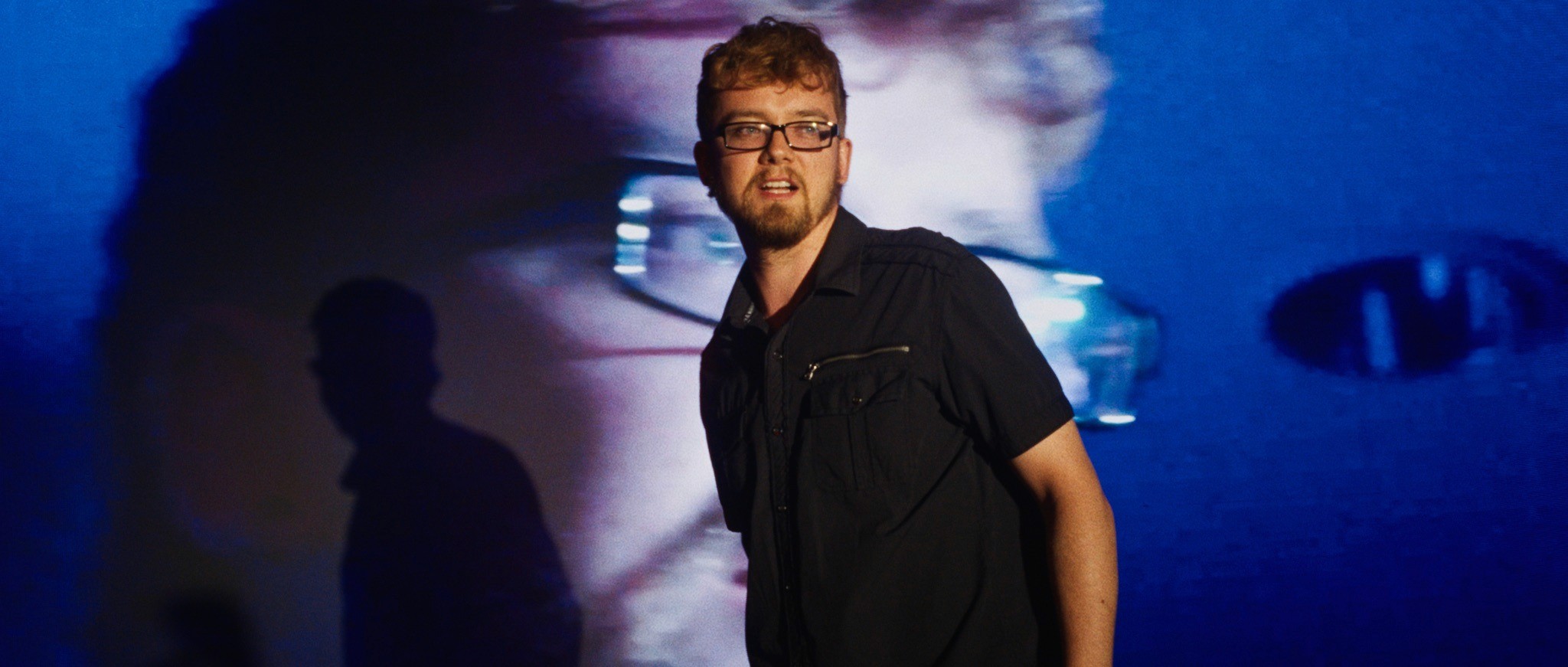
Solomon (Asa Butterfield), an isolated teenager in Texas, is thrust onto a stage by his father.
JT: What sort of advice could you offer to filmmakers when it comes to maintaining confidence and a vision?
OB: Look, man, I'm 41 years old. It took me a long time to get here. I think if you are in a position, like you have the script and you're only 20-years-old and you're like, “This is the thing I should be making,” and you are able to find the money to do it, go for it.
Like, you will learn a lot and any opportunity to make a film and be a director, you should take because you will learn a lot and you will probably fail. Hopefully fail and fail better … For me, it was over the course of a lot of short films that I made a lot of mistakes that many a first time filmmaker does. But it's just work, you have to just keep making stuff.
And if you don't have the budget to make a movie, then write something. And if you've written five scripts and none of them have been produced, just keep going. That's hard work and you're gonna get better. And if you keep sharing what you're working on, people are going to notice and notice that you can write and make stuff.
… The more you do that, the more you learn who you are, you learn what you like, you learn what your voice is and what you're interested in and what your creative values are.
“Our Hero, Balthazar,” starring Jaeden Martell and Asa Butterfield, is now playing in select theaters. Buy tickets here
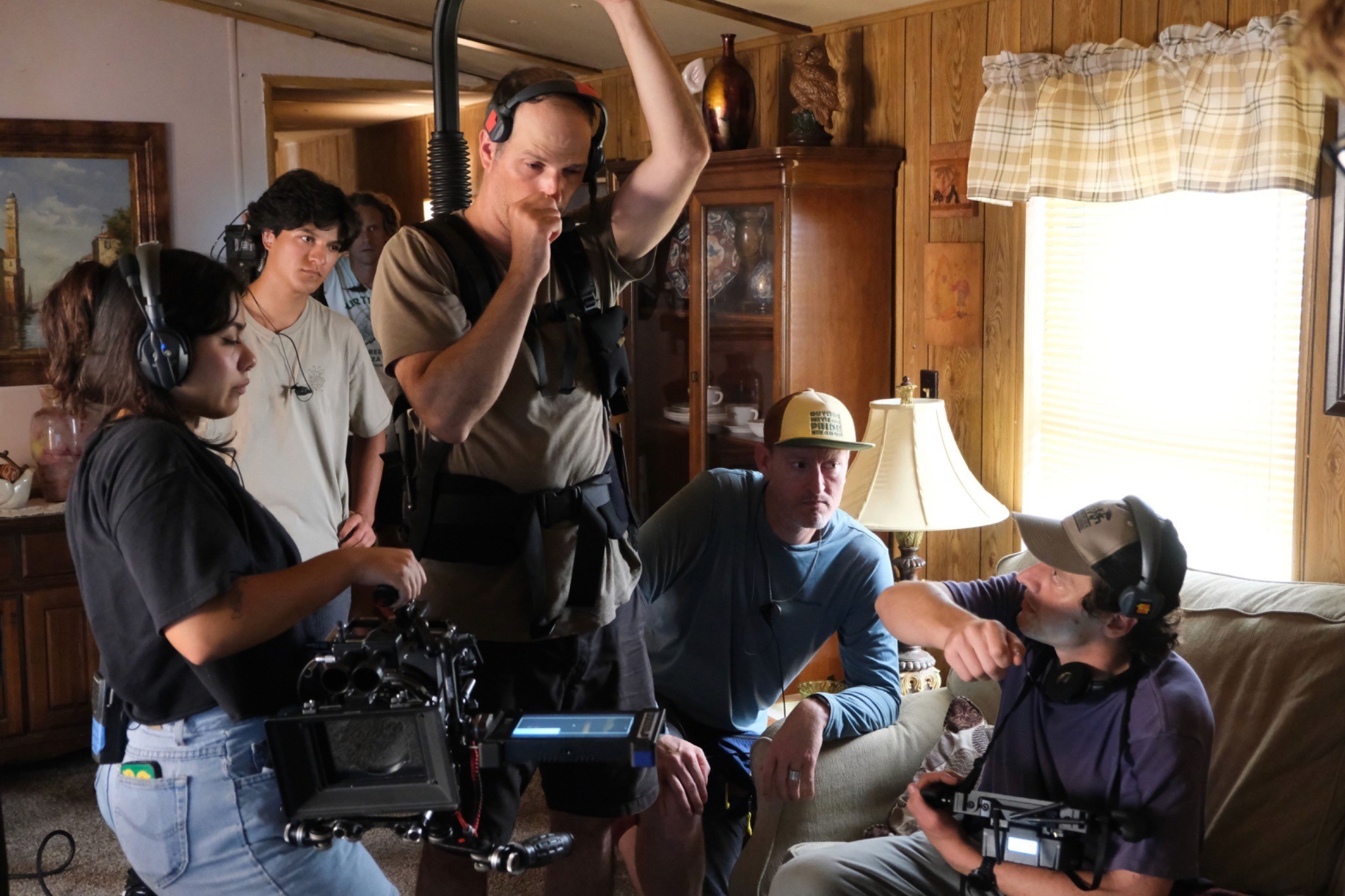
Left to Right: Crew, Christopher Messina and Oscar Boyson (Credit: Max Frankel)