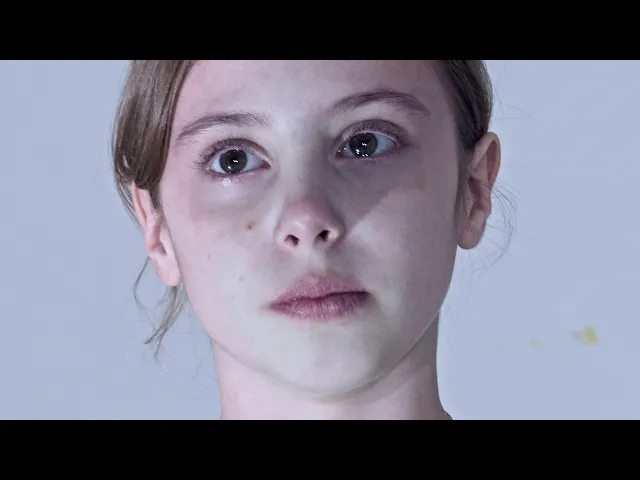

Perfect Harmony: An Interview with Brutalismus 3000
Jack Tellier
Jun 29, 2026
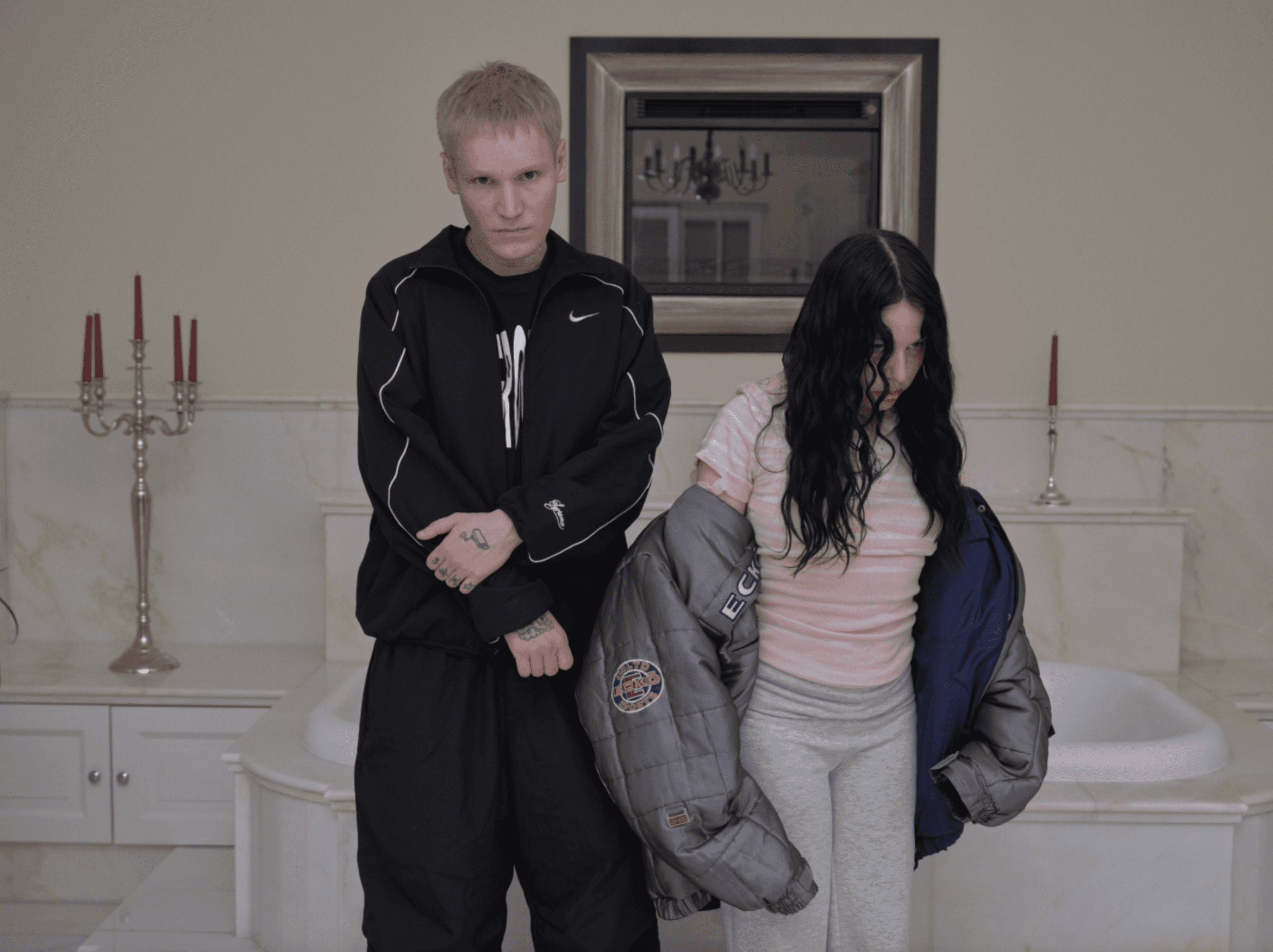
(Photo Credit: Tom Funk)
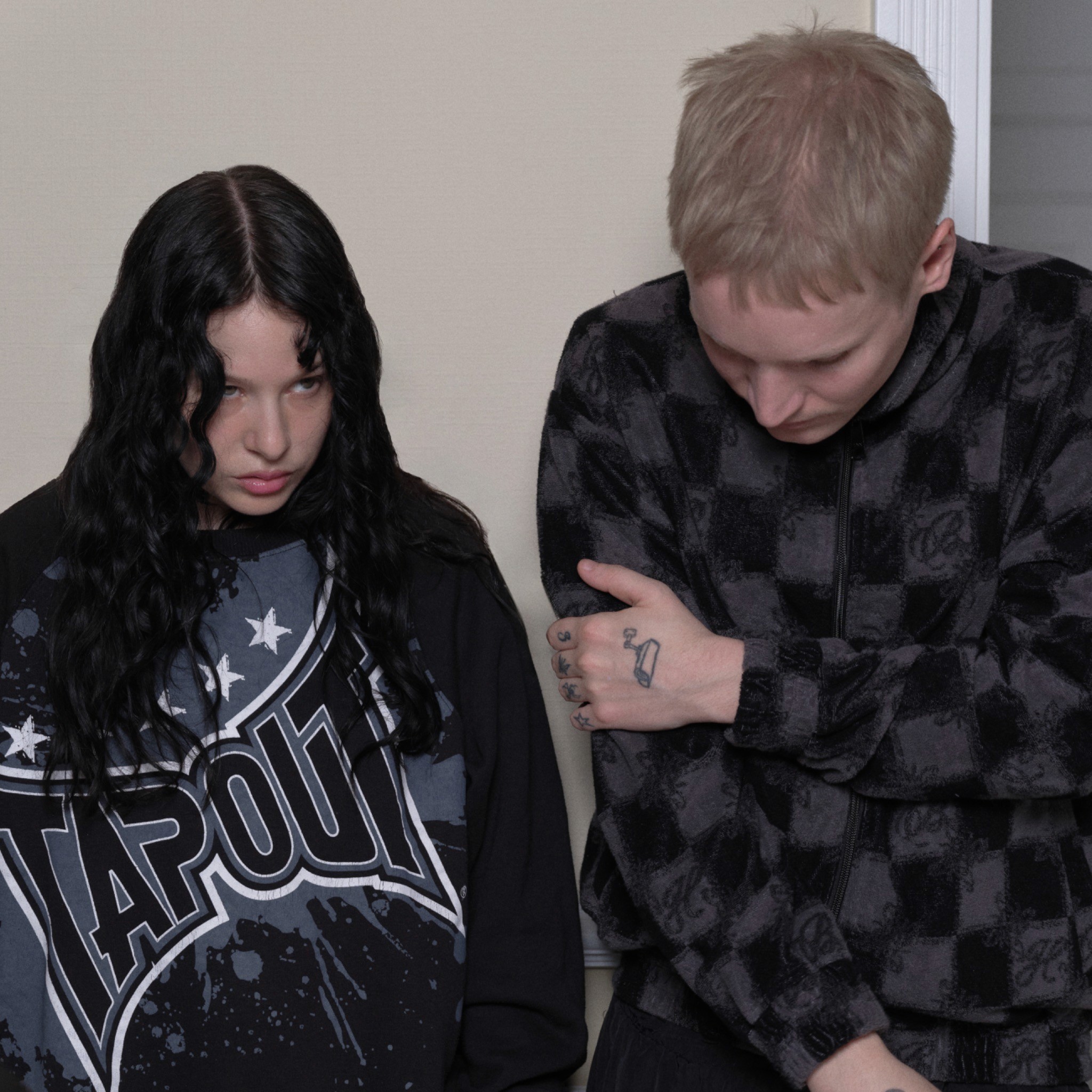
Theo Zeitner and Victoria Vassiliki Daldas, the couple who comprise the maybe gabber, possibly hardcore, genre-bending, Berlin-based group Brutalismus 3000 – despite their serious, almost spooky look – cannot stop giggling. Their new album “Harmony” has been two years in the making and to say the two embody that theme would be a wild understatement. Throughout this interview, you’ll find that the musicians frequently laugh at the same time and finish each other’s… sentences.
Brutalismus 3000 began releasing music in 2020 and their handful of interviews since then have focused almost entirely on how the couple met and the ins and outs of their relationship. All cutesy stuff that you can read about elsewhere, because here, the two examine their artistry with a microscopic lens.
Sleepless nights, pigsheds, sound booths made of beds and Hollywood stars – all this chaos and more were part of a whirlwind process to perfect “Harmony.”
Jack Tellier: How was the listening party last night?
Theo Zeitner: Sick. It was really great, actually. Yeah, they went super wild, but we basically just ran from the airport to there and then I didn't have my sticks and nothing worked and we didn't have, like, an adapter for our laptop.
And then I loaded the record on the stick, like, 10 minutes after showtime or something, so it was a little chaotic, but it was nice.
Tellier: I feel like there's always an adapter missing, no matter what event you're at.
Zeitner: And you never bring one.
Tellier: I really loved your guys' album. I thought it was fantastic.
Daldas and Zeitner [in unison]: Thank you so much.
Victoria Vassiliki Daldas: We're very happy to hear that. [Laughs] It's exciting to put it out into the world and slowly more and more people are listening to it.
Tellier: I really, really felt like this album was just, I don't know how to explain it, but it sounded huge. Like, it was really an evolution in your guys' sound … I felt that this was you guys at your most genre-bending.
Zeitner: Yeah.
Tellier: What was the creative process like for you guys while you're experimenting with so many sounds?
Daldas: Mhm.
Zeitner: I mean, the process was, like, all over the place in the beginning. We just had this idea in our minds to make this, like, make our next record and call it “Harmony” and make a record that is super toxic and aggressive and just, like, that throws every fucking idea we have out there and make, like, a statement record, you know? Like, this is us. But then you kind of, like, we had to learn how to do that shit. Like how to produce trap, how to produce dubstep, to do like, metal. There's a little metal part in the beginning, you know?
We tried to do it super chaotic and everything, but then you actually had to meticulously learn a lot of stuff and really, like, sit down for two years and really, really, you know, focused working on stuff. So it was more conceptual than it might sound, actually, I would say.
Daldas: It became also more harmonic, I think, over the time. It was actually nice to just go without any, like, kind of— we were fearless, you know? Where you could just start, be super chaotic, throw first everything in, put all the ideas and then slowly work your way through and see where the red line could be or what in the end is going to stay in the album, which song is going to be thrown out. I think we found our harmony towards the end. And I think it's also listenable in the album that it comes to later, the more opportunistic part or the more…
Zeitner: Optimistic, you mean. Yeah, yeah.
The two of them laugh and repeat “opportunistic.”
Daldas: [Laughing] Opportunistic! So I think, yeah, I think that's how it was.
Zeitner: Yeah, crazy process, for sure.
Tellier: What was the first day? What were you guys focusing on? Where was your start for this crazy process?
Zeitner: … We had the name and we were in New York at the time, I think, and just played a show and just, like, finished our last EP, “GOODBYE SALÒ,” and, like, immediately jumped to the next thing.
I think just the name “Harmony” came into our heads and we just put this idea out to do a record that focuses on...
Daldas: Toxic positivity.
Zeitner: Yeah, toxic positivity. Because we were, like, really, really interested in making a really toxic record. So we wanted to do something that's against the notion of, you know, like, “Cut toxic people out of your life, blah blah, blah. Only good vibes,” and we wanted to do something that's only bad vibes and really just make the world a more toxic place.
But, yeah, you know how this goes. You have this idea in your head and then it just doesn't... it doesn't become that. Maybe it is in the first half a little bit. But, like, we are no toxic people and we don't only have hate in our hearts — even if we wish sometimes for the sake of our hearts. It became really lovely and there's a lot of light and hope in the record as well, I think.
Daldas: Mhm.
Tellier: At first it does start out, like you were saying, somewhat toxic or hateful. But the second half is very heartfelt, not only in the lyrics, but just the general sound. You were talking about the production process, how you had to go and learn how to do a million different things. What was that like?
Zeitner: Actually, super lovely. Like, that was the least stressful part of doing everything. It's just super fun. And then you have someone like Dylan Brady, you know, who we kind of started in the very early process of the record. He was with us a lot. He didn't teach me to do it, but you know, you just see how he does it and then he gives little sparks of ideas that I think no one else could do than, like, a Dylan Brady. And then you just take those ideas and make it yours. It was really just, like, learning and having fun with it … The most joyful part of producing is learning new stuff. So that record was a lot of new stuff.
“It looks different to the outside world. But behind the curtains, it's boiling.”
Tellier: What was the most stressful part?
Zeitner: That's the end. Always.
Daldas: That’s now, I think. I think for us, it was really hard in the end to put that into a visual concept because we're both very visual persons, also. We really wanted to come up with a very clear rollout of the album.
… I think it also happens the more you grow as an artist, you start to work with more people and stuff and I think you start to forget where were the people you were working with in the beginning, or how did you work when we were just the two of us. We needed to learn the hard way that we have, in the end, the best ideas and it takes much more work-
Zeitner: The best ideas for us.
Zeitner starts laughing.
Daldas: Yeah, the best ideas for us.
Zeitner: (sarcastically) In general.
Daldas: (laughing) In general!
Tellier: Maybe!
Daldas: But I think just take the time and just do it yourself, of course, with help of friends again. We kind of also, in the end, went back to the basics and we started working with people again that we used to work with five years ago, six years ago when we started. In the between time, we needed really to learn it the hard way and it was a hard process to get all the video concepts and everything going. I think we're still in the middle of that. It looks different to the outside world. But behind the curtains, it's boiling.
Zeitner: It’s that time. It's always in your mind, now it actually comes out. Now it's actually the important times. Obviously, it's more stressful. Now it's getting real.
Tellier: Victoria, you did some very crazy and wonderful things with your voice on this record. These are sounds we've never heard from you. How did you practice that or get into that state?
Daldas: Well, I totally agree with you on that.
The couple giggles.
Daldas: For me, it was also very surprising. I think it was, as I said, the people we worked with and then we also kind of went back to the basics and just took the time to try some things out. We also worked with one of our best friends and he really, like, pushed my boundaries and said, “Try some stuff.” Because, you know, sometimes you're in sessions, let's say, with a stranger. There's five guys sitting in a room and you don't want to even try your voice out because you’re just fucking uncomfortable.
Zeitner: It’s always dudes.
Daldas: Yeah, it’s always dudes, also! You’re like, “Okay, I'm just going to do what I know.”
Zeitner: They have no idea what they're doing. They're just standing in the studio, like, “Who are you, even?”
Daldas: Yeah, you turn around, there's five guys smoking joints and you're like, “Okay, fuck.”
I think I just took the time and I also really wanted to challenge myself. I’m also really proud of myself, I can say. Like, I didn't even know, because I don't have any singing history, I didn't even know I could get there. So I'm happy and also I need to say to Theo and Micah, Dylan and Alex (Boys Noize) they’re so— even though they're all guys again, [laughing] how they approached me was really nice.
They tried me. They said, “You can do it better. Try this, try that, try that in a higher tone.” I think, yeah, they pushed me and I felt comfortable with them. They were, like, a lovely team.
Tellier: Is there a specific sound or sort of chorus on here that when it was made, you were like, “Wow, I can't believe I sound like that?”
Daldas: Yeah, probably. Hmmmmm…
She looks at Zeitner
Zeitner: “Gore Louvre,” maybe.
Daldas: Yeah, I think “Gore Louvre.” This one is a bit more punky, I need to say. And this one is very wild. It was the first take and we kept it like that.
Zeitner: For me, with your performance, yeah, “Gore Louvre,” for sure, because, I mean, it's still very classic. Like, it's your, like, where you shine the most was this performance. But it also has a lot of, like, playful stuff in the voice and this kind of rock and roll aesthetic. With breaking your voice or, like, this Elvis kind of shit, you know, like—
Zeitner makes a quick and swinging, high pitched humming noise.
Daldas: Mhm. Ha!
Zeitner: And it was also really masterfully done. It doesn't feel fake or anything. And you hear it as well, there's way more focus on the vocals than before. It's not an instrument anymore, you know?
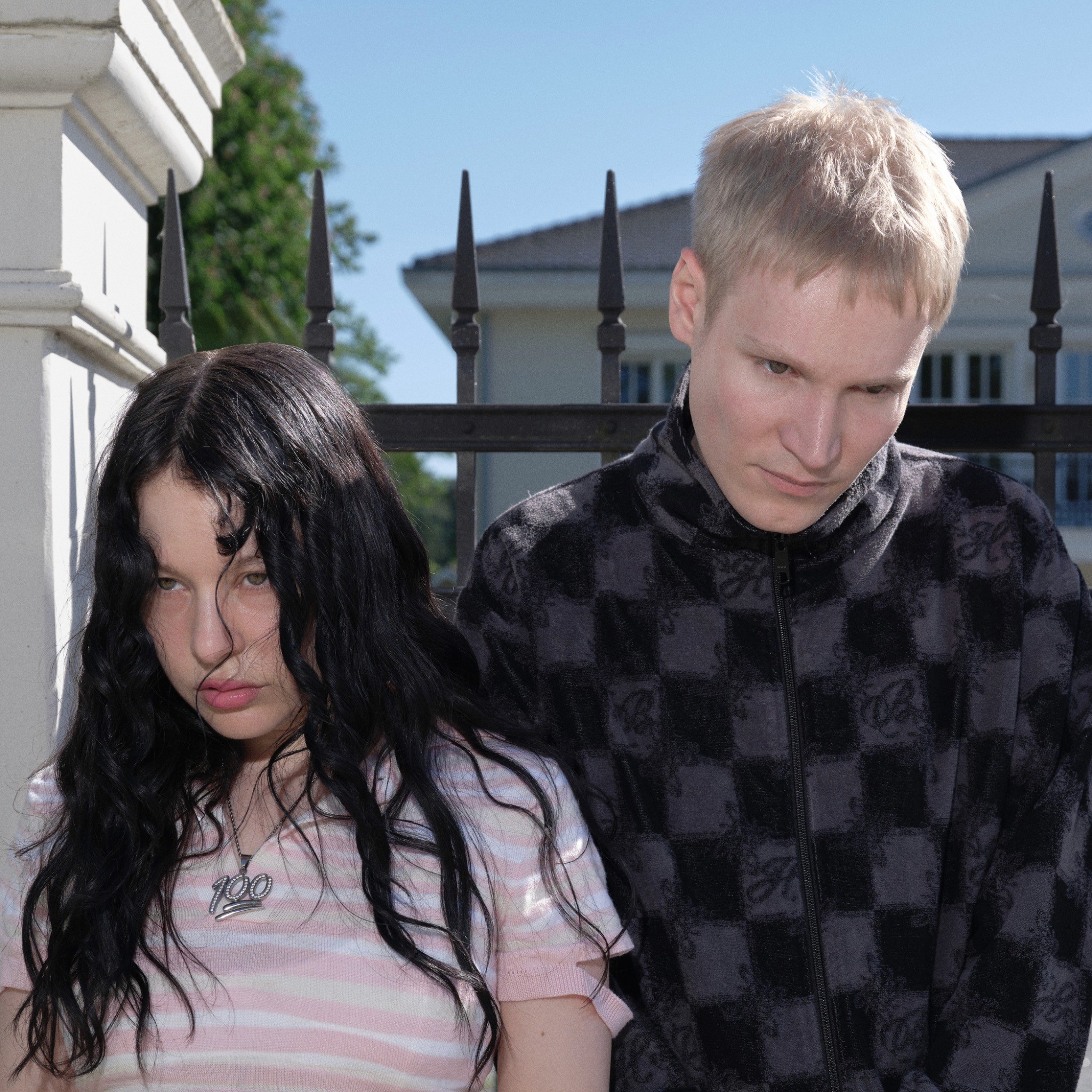
(Credit: Tom Funk)
Tellier: Do you guys really push each other to do crazier and more experimental things? You guys are a couple, but you're also sort of co-workers. How do you guys push each other to go for more in the sound?
Daldas: I mean, we're, in general, very chaotic people. So also, when we work, it's pure chaos. And I think the more crazier we get in a session, the better the sessions. Not in the later process, but in the starting process. It gets…
Zeitner: It gets to be wired.
Daldas: Sometimes it's good, sometimes it's bad because then we have a hangover for some days. But, you know, you have less fears and stuff. You're like, “Okay, let's try this, and I think the longer you stay with it and fuck with it, you go to places where you would not have dared, maybe when you would have stopped after a five-hour session or something.
Zeitner: Yeah, we're still in that kind of phase, I think, as musicians where you have maybe a little bit of an unhealthy relationship with making it, but it works for us if we go all in, you know, and do it unhealthy and crazy.
“I think the more crazier we get in a session, the better the sessions.”
Tellier: Some of these songs, particularly “Friends At The Pigshed” with Underworld, felt very emotional and almost soft. When you guys are making something like that, how does that feel different from one of your guys' traditional crazy songs?
Daldas: I think for me it was more, because it was such a globetrotting album, that you had different emotions in different places where you were recording. So this one we did actually at the pigshed with Underworld. They have a studio and it used to be pig sheds. We became really good friends and I think the emotions we had while doing that song, it was just a natural process. And then maybe some songs we did at Dylan Brady’s studio have a different vibe. For me, sometimes it comes from the place where you record.
Zeitner: Yeah, yeah, totally. That was just the vibe we have with Underworld. It would have been cool to make an aggressive, Brutalismus-sounding track with Underworld, but also the vibe in that pig shed was just, like, that really lovely connecting [of] two genres of music. Even if it's both electronic or techno, but it's so different and, like, connecting this together and becoming friends in the process. I think that's – and I hope – that's how the track sounds like.
Tellier: How did you guys even initially connect with Underworld? Because that's a pretty insane feature to have on an album.
Zeitner: Yeah, we're super proud. We didn't know, they just invited us when they played in Berlin, in Velodrom — this big venue. They just invited us over email, I think. Just a management email, and they’re like, “Just come guest list, blah, blah, come by.” We were like, “We were gonna go anyway, but let's go,” you know? We thought it was gonna be that thing, you know, like guest list and you're gonna stand there, watch the show, and you leave. But actually, their manager waited outside at the venue and got us inside, got us backstage.
We had our own backstage there that they just, like, filled up with drinks and everything for us. And they just came, before they went on stage, and came and talked to us for, like, half an hour, and then went onstage. They even- [laughs] they even wanted us to come onstage and just, like, be with them for a second even if we didn't do anything for the show.
Daldas: It was cute. Since then, we became really good friends. They always invite us to their pig shed near Essex, so that's where they live and we went there now a couple of times. We always stay at, like, a little hotel built in the 1400s and I think that’s haunted by ghosts and stuff. [chuckles] I think once or twice a year, we just go and visit them and we just have the best time. … They're the most lovely people-
Zeitner: Really, really nice people, yeah.
Daldas: -in the music scene.
Tellier: You guys also have another very crazy feature on here. When you guys first dropped the track list and I looked at the feature, I was like, “What the heck?”
The two laugh again.
Tellier: So, Anya Taylor-Joy, I can't even imagine how you guys met her. What happened there?
Zeitner asks Daldas if she wants to explain.
Daldas: Well, we were just, we were playing a festival in umm…
Zeitner: Budapest.
Daldas: Budapest and they were shooting June 3. So they came to see our show. It was her husband and her associate. And, yeah, we invited them backstage, we had some drinks and you know how you talk. They said, “Okay, let's do something. We're gonna write, maybe come to Berlin.” We didn't thought much of it at that time and a few months later, a message came [from] a good friend and assistant and yeah, “Anya’s coming to Berlin.”
So they stayed the whole weekend with us, we went to Berghain, we were recording. Yeah, we bonded really, really good and I think since then we also became really close friends. Also, all the features there are also good friends.
Zeitner: Yeah.
Daldas: Good friend features. [Giggling]
Zeitner: Everyone is a friend there.
Daldas: Since then, we met a few times. We recorded here and there. We went to visit her in LA.
Zeitner: Went to her birthday just a few months ago.
Daldas: And I think she's a very talented artist also musically, which a lot of people maybe still have to discover yet.
Zeitner: On the record now, it's a poem. Which I think is very powerful and one of my favorite pieces on the record. But we also actually made another track where she's singing that has more like a feature structure. That will probably be on an extended version later in the year. But we just gotta finesse it and she's very, very meticulous. Like she cannot have anything that is not perfect, which I'm the same. I'm the same, so we're on the same page. We gotta work on this track for, like, ever and then release it.
Tellier: She was reading a poem you wrote, Theo. While you guys were recording, were you guys sort of directing her? …
Zeitner: When I showed it to her, that's like, they just arrived in Berlin and then came to our place and we just had a drink and just chilled a little bit. And then we went into our little home studio. We built, like, the most ridiculous sound booth for her because we don't have a sound booth. We usually record with just one mic and put a sock over it.
So we built, like, you know, like, where you do pull-ups? I have, like, this little machine and we put mattresses around it and bounded it with, like, ropes to make it soundproof. And we’re like, “Okay. Here, like, here's a sound booth for a Hollywood star.”
The couple is laughing pretty hard.
Tellier: How do you guys have multiple mattresses to put around?
Zeitner: [Laughing] Yeah, that's another question. I think it was, like, toppers of the mattress and our guest mattress. We have a little guest mattress. And then we showed her the record, just wondering what we want to do together. And then I said, like, “There's this one piece that is very cinematic which should break the record in two and should be, like, this little breather and blend in the harmony of the record a little bit.” Then I showed her what I wrote and she just asked me how I was feeling at the time when I wrote it.
I just told her very open how I felt and then she said, like, “OK, I don't need anything more.” Like, she just got it completely and then went into our shitty, crack sound booth and did the recording. She did ask sometimes [for] little notions. It was really nice to see how she works in a place like that. It feels weird to direct, but it feels very natural if she asks you, you know?
Daldas: She got it immediately on the point.
Zeitner: Exactly, yeah. Like, there didn't need to be a lot of directions because she really understood the text and everything and then just made it perfect.
“Here's a sound booth for a Hollywood star.”
Tellier: So you went to film school, correct?
Zeitner: Yeah.
Tellier: In this album, there's a range of emotions and it almost felt like a movie … I wanted to ask what your guys’ favorite films are right now.
Daldas: … [The album] was supposed to feel cinematic and I think we drew a lot of inspiration from movies, actually.
Zeitner: Yeah. Always did, always did.
Daldas: We always did and we always will, probably. [Chuckles] I mean, I have a Letterboxd, whoever wants to get on that. I think just in general, for the record, I think it was “Kairo,” right?
Zeitner: So, “Kairo” is ”Pulse,” like the-
Daldas: Japanese horror movie and the track is also called “Kairo” and it's about loneliness. He showed it to me and then I think, yeah, after we said, “OK, this is the song to go to-
Zeitner: Divide.
Daldas: … In general, it's “Wild at Heart” by David Lynch. It's my favorite movie. And then I have “Il Conformista/The Conformist.” It's an Italian movie; it’s one of my favorites. And “The Lovers on the Bridge” by Leos Carax and I have “Beau Travail.” I think we like the same ones-
Zeitner: [Matter of factly] I have a different list.
Daldas: -and maybe “Titanic.”
Zeitner: Ah!
Daldas: Sorry, I will leave “Titanic” to you. But I think these are my favorite movies of all time.
Zeitner: We have “Wild at Heart,” that's our kind of, like, favorite movie and we both have it. … The most perfect movie I've ever seen is “Safe” with Julianne Moore. I love that movie so much. I think it’s the most perfect movie ever made and it's also very inspiring for the record, for like the beginning idea, because it has all of that toxic positivity things in it. It's about like guiding people into how far we've gone wrong so far and there’s nowhere back.
And then “Titanic” is our favorite. It's my favorite blockbuster of all time. We watch it every Valentine's Day-
Daldas giggles.
Zeitner: and it's always like the most lovely- and it’s such an adventure and then it gets so sad, like it's at the same time. Kind of respectful — I mean, it's a blockbuster about, like, 2000 people dying, which is a little disrespectful. But they kind of made it in a way where it's both entertaining and exciting, but also sad and just beautiful. Just makes me super happy. And then I have “The Long Goodbye” by Robert Altman, which I really love. Super stylish and just a pure vibe.
Those are four already, right? I mean, it's not Letterboxd top four. But those are my top four.
Daldas: I’m so happy that finally someone asked! … We also have an extra horror film list.
Zeitner: Oh! “Dog Day Afternoon.” “Let's say Dog Day Afternoon,” The Al Pacino one, yeah. If I could have five, that would be the fifth probably.
Tellier: I mean, on SADPRT, you can have five. It's fine.
Zeitner: OK, perfect! That's the SADPRT top five. Ha!
(Credit: Tom Funk)
“It would be great to have another misery that is not our misery of this world.”
Tellier: Victoria, I read that you were very into aliens.
A smile creeps across her face.
Tellier: I don't know if you've been following, but the U.S. government has been releasing all of these files. I wanted to get your input on that.
Daldas: Well, I think I was not very surprised and also no one seems very surprised. Yeah, I think they waited long enough to [not] surprise anyone. But I really like conspiracy theories in general. I think it's something that people have. That's why we like violent music. I think this kind of stuff always calms you down as a human being in general. …
Zeitner: Conspiracy theories make some people really angry though. [Laughing]
Daldas: I just read it and then I think, “OK, there's other things going on.” Things going on and maybe sometimes you don't need to focus on different topics sometimes. But I saw that, I think it was not a big surprise. Let's see what's gonna come in the future. Maybe they also will like our new album.
Zeitner: I hope so. I wish they would come, honestly, even if they're evil. Like, it would be great to have another misery that is not our misery of this world. Have something that humans just didn't do, you know? That would be great.
Tellier: I feel like that's a very German thing to say.
The two start laughing. Zeitner makes a humorous angry face and demands, “Why?” before laughing again.
Tellier: It reminds me of, like, a Werner Herzog quote.
The couple cracks up and looks at each other.
Tellier: So I guess if these aliens did come and you could give them one song to sort of represent the human race, what would you guys send them?
Daldas: I mean, I could say something very smart, like, I don't know, some Beatles song or something, but I think-
Zeitner: [Chuckles] Smartest band.
Daldas: I would give them “Twisted World” by Tommyknocker or something. It's, like, an old gabber track. Yeah, I think that's the one, I don't know if it's even with someone else. I think it's a remix, but it's like a Thunderdome classic. I think it just sums up humanity very well, but still has this very epic thing in it. So I think it covers the stupidity and greatness of humanity.
Zeitner: I would give Death Grips - “You might think he loves you for your money, but I know what he really-“ blah, blah, [laughing] you know that track that has, like, the longest title ever? Just for them to maybe start the war then.
Tellier: I know you guys have been together for years at this point, but in the theme of “Harmony,” how has music or this process brought you guys closer, does it feel like it has?
The couple looks at each other, thinking, and starts giggling again.
Zeitner: … It’s like the same as a relationship, but it doesn't get boring, you know? And it's the same in the studio as it is in personal life where you're like, “Okay, there's still so much more to get from this.” I think it will never be exhausted. This record was unthinkable two years ago, three years ago, let's say. And still, we went to the studio and showed the sides of ourselves and we did that.
Daldas: Mhm.
Zeitner: That’s, like, the harmony there.
Daldas: Also just learning from each other, mutual respect, I think. I mean, we travel together, we live together and we work together. So I think that's just growing the relationship in general and then if you make also, like, such an ambitious project, I think it takes a lot.
Tellier: So you guys did work on this for two years and it is so ambitious, what does it feel like that it's finally done?
Zeitner: Should- should feel better. Like, you know, you think you still have so much to do. But actually, we should just be like, “Okay, it's done.”
Daldas: It’s a bit of sleepless nights sometimes. [Giggling]
Zeitner: But I think once it comes out, it will be, like, such a relief and such an excitement and we really want to party hard. We're gonna do a release party in Berlin, have like, first hour is for press and people we don't know, and then just send them all out and only have friends and party. … But it's gonna be a big relief when it's out.
Daldas: Yeah, I think so. I think it's still sometimes sleepless nights. I think it takes a little bit to realize though, because yeah, there's still some micro-topics popping up every day that sometimes you forget to enjoy it.
“You think you still have so much to do. But actually, we should just be like, ‘Okay, it's done.’”
Tellier: After these parties, are you guys going to relax? Like what do you want to do?
Daldas: I think go for cinema music, maybe.
Zeitner: Yeah.
Daldas: Theo always wanted to produce something for the cinema, maybe. I think that would be also interesting to just expand there a little bit.
Zeitner: Yeah, just branch out a little bit, see whatever possibilities come up. But also like, I mean, we're gonna tour the record and, you know, once the record is out, the work starts again to like, show the world for months that our record is out … But yeah, like she said, then branching out and then trying some other fields. And then once we have that moment that we had with “Harmony:” make the most toxic record — when we have that again, you start the next record. Maybe the most lovely record the next time and it's getting there. …
Tellier: How have you guys changed as people over the course of this two year span?
Daldas: Hmmm… good question.
[Both laugh]
Daldas: I think for me, it's becoming more fearless and also more self-confident, especially when it comes to, you know, vocal recording and in general working in this environment — what we just talked about before — that I just have much more self-confidence and I know what I can do. It taught me also, you know, when you go with other people to the studio that in the end you can do it too. You're there for a reason and I think that's a good feeling.
I think I became also more humble for, in general, the whole process and how much work it can be and how overwhelming. And just taking some steps back sometimes because, yeah, it felt also overwhelming in some parts. So I think I need just to learn to rearrange my thoughts and my feelings and everything.
Daldas looks at her boyfriend and asks “You?”
Zeitner: Yeah, I think, like, with that question and having that super ambitious, mammoth project always gives you the question: who do you want to be as an artist? And that's a thing that, like, grew with the record for the last two years. And I think that changed because, before, we didn't think about it at all.
Like music was not, like — it was a job before — but when we started, it wasn't meant to be.
We never saw ourselves as musicians and with this record we were like, for the first time for me, like, “What actually do you want to do or what do you want to say?” And I still haven't answered that, [both laugh] but that's the change. That's the path I think I'm on right now. You know, actually thinking in terms of being an artist and what makes me an artist.
“Harmony” is out now.